Posts

OpenBazaar als teken van een bredere ontwikkeling

Afbeelding
Gisteren startte OpenBazaar, ik raad iedereen aan te lezen hoe hun concept in elkaar zit (  https://openbazaar.zendesk.com/hc/en-us/articles/208020193-What-is-OpenBazaar-  ) Los van de vraag of deze specifieke startup een succes wordt, het illustreert een bredere ontwikkeling naar meer gedistribueerde, P2P vormen van informatie-uitwisseling. Zonder een derde partij die toezicht kan houden, belasting kan innen, wetten kan handhaven e.d. Dat zien we ook in de financiĆ«le sector waar gevestigde partijen flink in Blockchain technologie investeren juist omdat ze zelf ook bevreesd zijn voor een dergelijke disruptie. Daarnaast zijn er diverse initiatieven/startups zoals  https://www.ethereum.org/  die ook volop inzetten op een gedistribueerde, P2P toekomst. Niemand weet wat succesvol wordt en hoe dit afloopt. Maar disruptie komt eraan. (picture by Eric Parker  https://www.flickr.com/photos/ericparker/2098566729 )

Artificial Intelligence will not arrive with a bang but with a whimper

Artificial Intelligence is a hotly debated trend. A lot of discussion is about the question what “true intelligence” is. And whether that could be artificial. Not the most interesting of discussions in my view. In my personal definition Artificial Intelligence is anything done by machines that you would expect could only be done by humans. This means that the definition is sliding. In the middle ages a chess playing machine would probably be called “intelligent”. Just as a self-driving car in the fifties. In general it seems that everything that is seen as normal /accepted is not viewed as “artificial intelligence” anymore. The fact remains that the combination of smart algorithms, machine learning/deep learning is changing our lives in a fundamental way. Not with a big explosion. But in small steps, gradually. An example is the fact that according to Google 10% of Gmail replies in the US is a smart reply. A sign of the digital assistant creeping into our lives. 

Legislation alone will not protect our privacy

Afbeelding
Privacy is an important subject in our times. Regardless where you stand on this subject. Everybody wants some level of protection with regard to their personal space. The problem is that the level varies with context and situation we are in. The traditional government approach  is to make legislation which provide the norms in this respect. Both on a national and european level regulations are made to protect the citizen. However alone they will fail. As I encounter in my work everyday,complexity of the information society is growing exponentially. Big Data, Internet of Things, Mobile, Artificial Intelligence are just some parts of this. Current laws are not compatible with those developments. They are in a different mindset, in a different industrial age if you want. The concept of platforms is not acknowledged nor accomodated. They overestimate the role the small nationstate can play in the global information context. There is no concept with regard to personal data that c...

Alsof Digitaal niet persoonlijk kan zijn

Afbeelding
In de media zie ik een oude discussie telkens weer opduiken. Zodra (overheids)dienstverlening slecht en ongemakkelijk is wordt in de strijd geworpen dat een persoonlijke aanpak nodig is. Er wordt dan veelal geduid dat een fysieke persoon de dienst moet leveren. Liefst aan een balie vrees ik.... Eens, dienstverlening moet zoveel mogelijk op maat gesneden zijn, aansluiten bij belevingswereld en context van de persoon. Dat impliceert echter niet dat er in alle gevallen moet worden overgeschakeld op een fysieke persoon en/of balie. Natuurlijk zijn er gevallen dat persoonlijk, menselijk contact nodig is en de beste vorm. Mijn stelling is echter dat we technologie nog niet optimaal inzetten om persoonlijke dienstverlening ook digitaal te leveren. Bovendien vervaagt het onderscheid volledig. Een skype gesprek met een ambtenaar over mijn aanvraag, is dat nu digitaal en/of persoonlijk ? Kortom, laten we onze energie zetten op het personaliseren en verbeteren van de dienstverlening. Met een mix ...

Over hoe we met betrekking tot privacy vaak het gevecht van gisteren voeren

Afbeelding
Als je een enthousiast volger bent van nieuwe technologische ontwikkelingen denken mensen vaak dat je privacy niet belangrijk vindt. Niets is echter in mijn geval minder waar. Ik hecht veel aan de bescherming van mijn persoonlijke levenssfeer en alles wat daarbij hoort. Tegelijk zie ik  in Nederland een maatschappij die zich met betrekking tot privacy richt op incidenten en zich veelal richt op de problemen van gisteren. Overigens zeg ik niet dat die problemen niet relevant zijn of moeten worden aangepakt maar het frustreert dat de echt strategische vraagstukken, die ook al geruime tijd zichtbaar zijn, niet pro-actief worden geadresseerd door politiek of overheid. Neem bijvoorbeeld de combinatie van spraakherkenning en artificiele intelligentie in de "cloud". Dit recente artikel beschrijft een ontwikkeling die al minimaal een jaar aan de gang is. Cognitoys en Watson zijn er echt al een tijdje. Evenals Google Now en Siri. Dit leidt tot technologie: waarmee je in spreekta...

Unsupervised learning with unstructured data, why it changes everything

Afbeelding
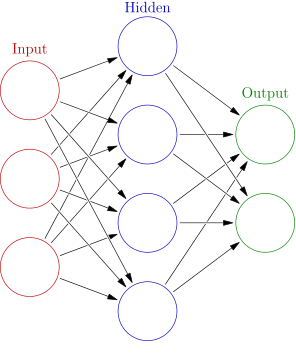
Recently I red an interview with Demis Hassabis from Deepmind , a company that Google acquired.  The co-founder mentioned in that interview his main focus, " It’s also called unsupervised learning— you just give it data and it learns by itself what to do with it, what the structure is, what the insights are. We are only interested in that kind of AI. ". The progress that has been made is published in Nature , read The Verge for the non-scientific version. The exciting thing as described in the mentioned articles is that the system does not "know" what a certain Atari game was. It let itself be trained by playing where a high(er) score was a reward. Just as with humans. In that way the system learned itself to play and win most old Atari games. With technology things becoming exciting when they become "general-purpose" , when you can use one system for different tasks and assignments. The PC is the ultimate example but also the smartphone. In software ...

If Google becomes our digital assistant, regulating it becomes necessary.

Afbeelding
The dominant company in search is further developing it's product it's famous for. In the beginning it was the possibility to search with keywords on the web. You would get the "best" results based on algorithms such as  Pagerank  among others. Also we would receive some advertising/commercial links with our query. But time has passed and what started as something relatively simple may be evolving into something we could call a digital assistant with "artificial intelligence". In human terms an entity I can talk with, ask questions in normal language, who knows what I like, who I have met, where I have been etcetera . Google is quite open that this is their goal. People like Kurzweil and others have been hired , companies with AI technology have been  acquired to accomplish this. If you observe Google you can see that they are getting there. With Google Now, improvements in Google Translate, added intelligence to Google Hangouts and so on. With normal sear...